Monique Wittig
French theorist who challenged heterosexuality as a political regime.
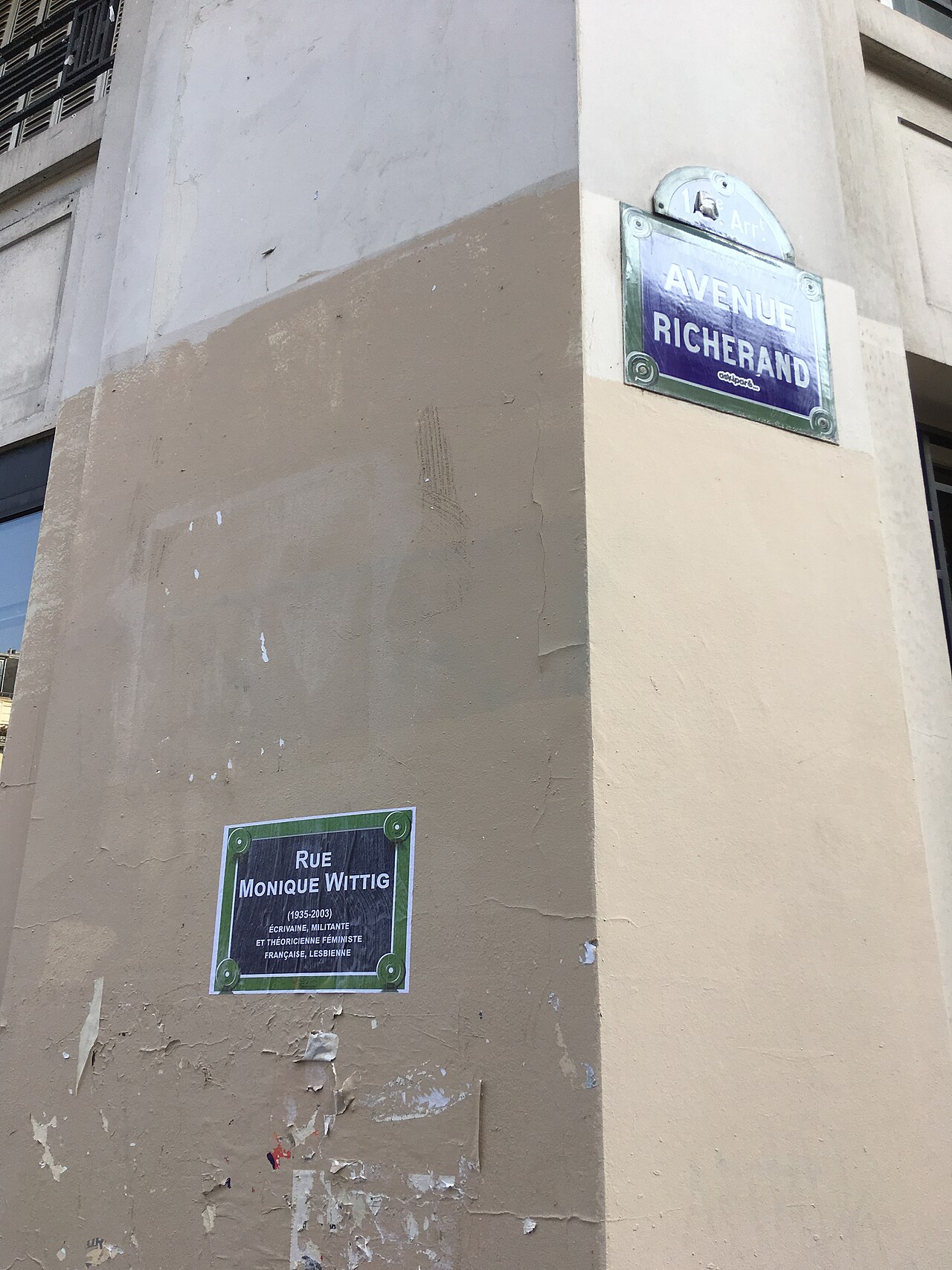
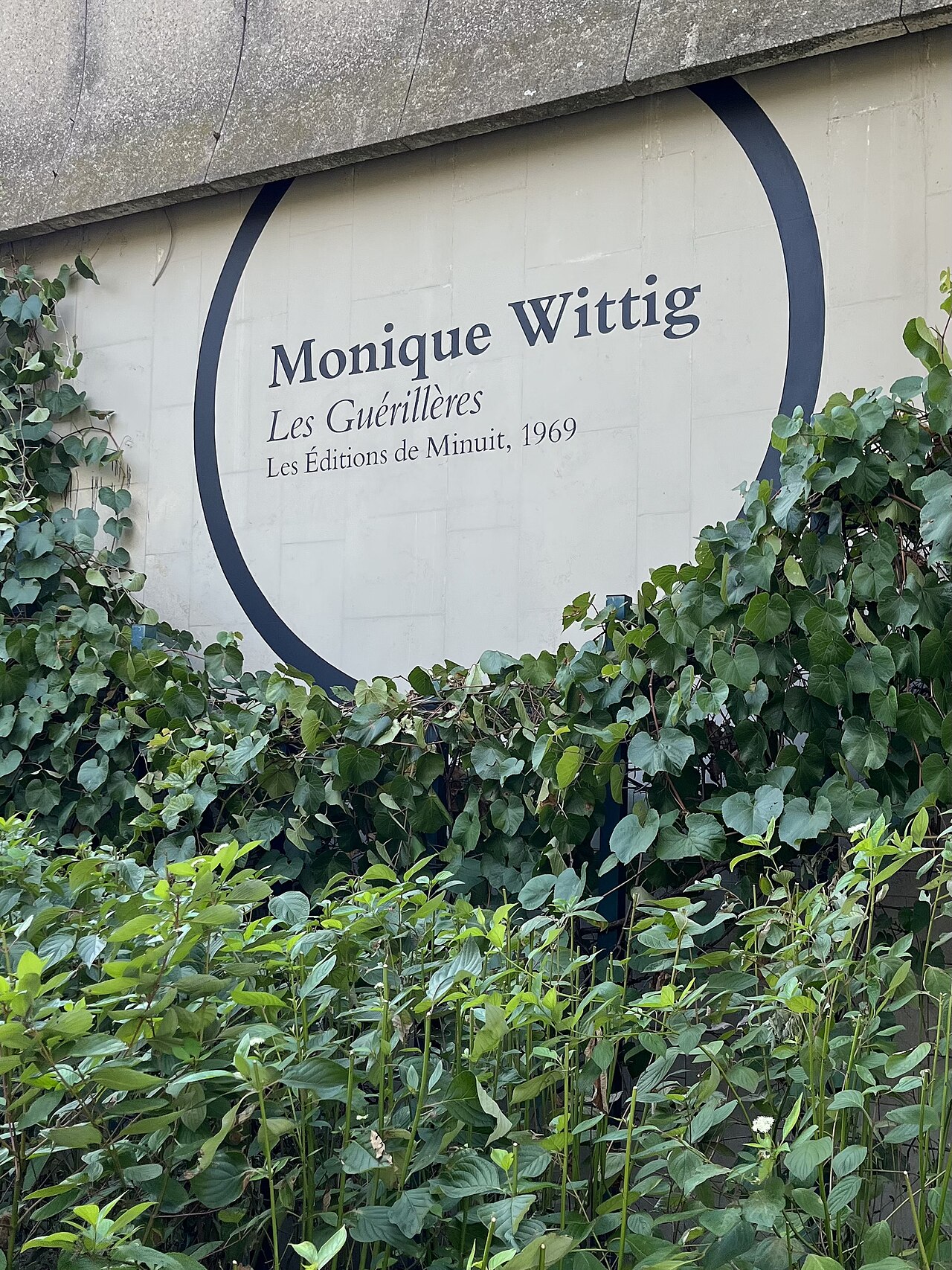
Monique Wittig (1935–2003) was a French author, philosopher, and feminist theorist whose work centered on abolishing the sex-class system. She coined the term "heterosexual contract" and is best known for her collection *The Straight Mind and Other Essays*. Born in Dannemarie, Haut-Rhin, she moved to Paris in 1950 to study at the Sorbonne. Her first novel, *L'Opoponax* (1964), won the Prix Médicis and brought her international recognition after its English translation. Wittig was a founder of the Mouvement de libération des femmes (MLF), the French Women's Liberation Movement. Her second novel, *Les Guérillères* (1969), is considered a landmark text in lesbian feminism and a founding event of French feminism. She earned a PhD from the School for Advanced Studies in the Social Sciences under Gérard Genette. In 1971, she co-founded the Gouines rouges ("Red Dykes"), the first lesbian group in Paris, and was active in the radical feminist group Féministes Révolutionnaires. She later published *Le Corps lesbien* (1973) and co-authored *Brouillon pour un dictionnaire des amantes* (1976) with her partner, Sande Zeig. Facing resistance from MLF members who sought to paralyze lesbian groups, Wittig and Zeig left France for the United States in 1976. There, she developed gender studies, taught at universities including UC Berkeley, Vassar, and the University of Arizona, and had her students correct the American translation of *The Lesbian Body*. Wittig’s materialist approach emphasized language’s role in shaping reality; she used split pronouns like "j/e" to challenge gender binaries. She argued that heterosexuality is a political regime, not merely a sexuality, and that the categories "man" and "woman" are political and economic classes that would disappear with the overthrow of the heterosexual system. Her work has influenced feminist and queer theory, though her materialist stance distinguishes her from later developments. She died of a heart attack on January 3, 2003.
- known_for
- Author of *Les Guérillères* and *The Straight Mind and Other Essays*; radical cr
Lore & Background
Monique Wittig was a French author, philosopher, and feminist theorist born in Dannemarie, Haut-Rhin, in 1935. She moved to Paris in 1950 to study at the Sorbonne. Her first novel, *L'Opoponax*, published in 1964, won the Prix Médicis and brought her international recognition after its English translation. She was a founding member of the Mouvement de libération des femmes (MLF) and later of the Gouines rouges, the first lesbian group in Paris, as well as the radical feminist group Féministes Révolutionnaires. Her second novel, *Les Guérillères* (1969), is considered a landmark text in lesbian feminism and the founding event of French feminism. Wittig earned her PhD from the School for Advanced Studies in the Social Sciences under Gérard Genette. She coined the phrase "heterosexual contract" and wrote *The Straight Mind and Other Essays*. Her works, including *Le Corps lesbien* (1973) and *Brouillon pour un dictionnaire des amantes* (coauthored with Sande Zeig, 1976), explore the intersection of lesbianism, feminism, and literary form. She used innovative techniques such as split pronouns (e.g., "j/e") to challenge gender binaries. In 1976, facing resistance from certain MLF members who sought to destroy lesbian groups, she and Zeig left France for the United States, where she taught at universities including UC Berkeley, Vassar, and the University of Arizona. She died of a heart attack on January 3, 2003.
Reader's Guide
Monique Wittig's significance lies in her materialist feminist theory, which argued that heterosexuality is a political regime that must be overthrown, not merely rearranged. She insisted that the categories of 'woman' and 'man' are political and economic classes that exist only within a heterosexual system, and that destroying that system would end those categories. Wittig's innovative literary techniques, like split pronouns in *Le Corps lesbien*, challenged binary gender logic. Her relationship to feminist and queer theory is complex: some see her as a precursor to queer theory, while others argue her materialist approach sets her apart. She called herself a 'radical lesbian' and opposed the notion of 'women's literature,' asserting that language allows a space where sex is not determining. Her legacy includes influencing debates on heterosexuality, gender, and the role of language in shaping reality.
Did You Know?
- She earned her PhD from the School for Advanced Studies in the Social Sciences under Gérard Genette.
Gallery




Frequently Asked Questions
Who is Monique Wittig?
Monique Wittig was a French writer, philosopher, and feminist theorist who became a foundational voice in lesbian feminism and materialist feminist thought. She is best known for challenging the political structures of heterosexuality through both fiction and theory.
What are Monique Wittig's most important works?
Her two most cited texts are the novel Les Guérillères and the essay collection The Straight Mind and Other Essays. Together, these works established her as a central figure in radical feminist and queer theory.
What is Monique Wittig's central theoretical argument?
Wittig argued that heterosexuality functions not merely as a personal preference but as a political regime that organizes and enforces social hierarchies. She contended that dismantling this regime was a prerequisite for genuine liberation.
Why is Monique Wittig important to feminist and queer thought?
She provided a materialist framework for understanding how heteronormativity operates as a system of power, influencing generations of feminist and queer scholars. Her insistence on lesbian separation from heterosexual structures became a touchstone in 1970s and 1980s feminist discourse.
What does 'The Straight Mind' refer to in Wittig's work?
The phrase names the assumption that heterosexuality is a natural, neutral default rather than a constructed political arrangement. Wittig used it to critique the way academic and social discourse treats straight identity as the unmarked norm.
More in Political Theorists And Social Scientists 1-24
Related in Political Theorists And Social Scientists
Links follow this subject's own source article.
Spotted an error? Know more?
This is a living reference — every entry is fact-audited, and reader corrections feed straight into our audit queue. Suggest an edit · See this site's audit record